
 English

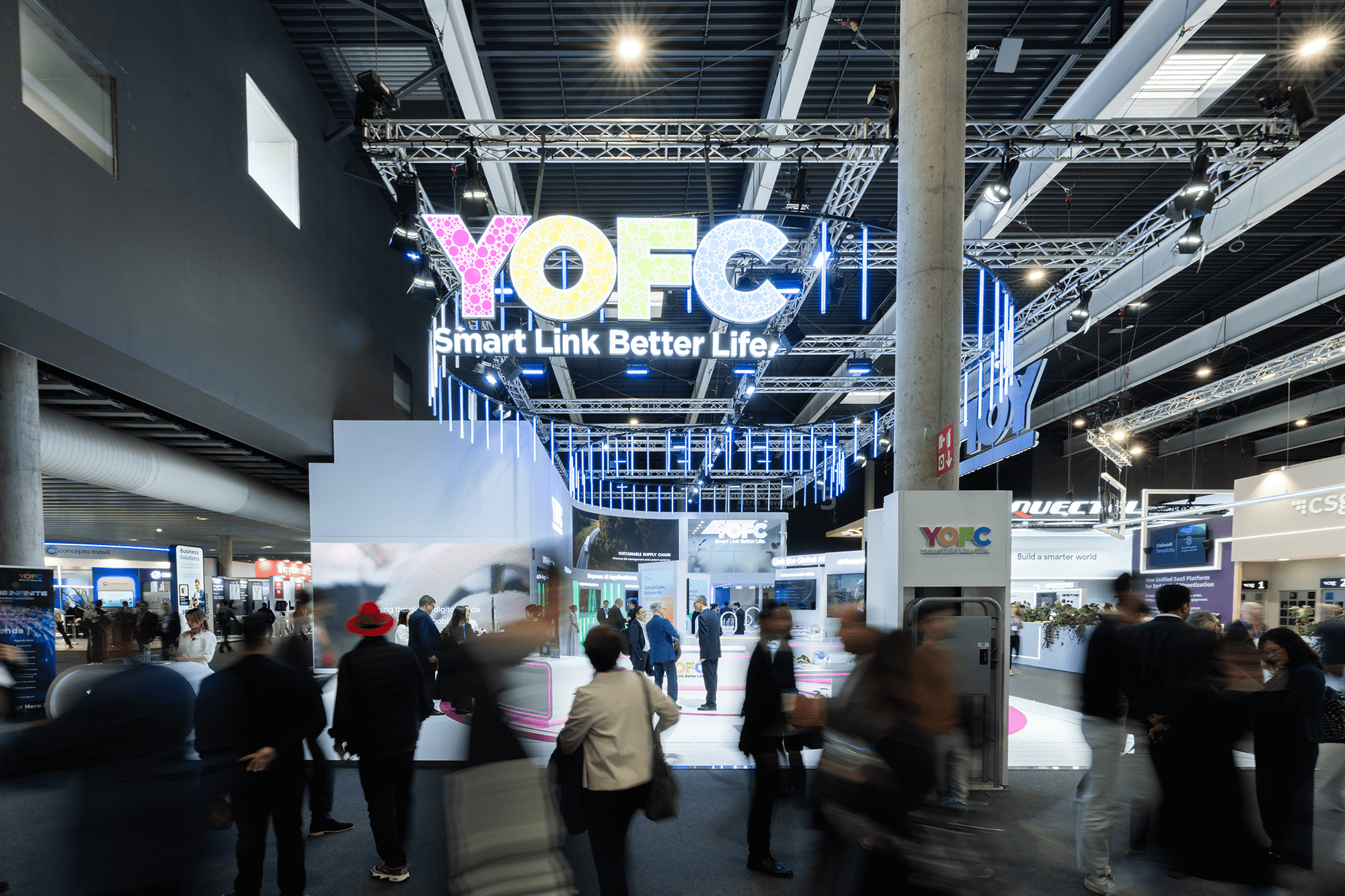
At MWC Barcelona 2026, YOFC presented its “AI × Fibre” technology vision, highlighting innovations across AI computing infrastructure, optical network connectivity, industry applications, and next-generation optical fibre technologies.
Through an end-to-end portfolio of advanced optical fibre technologies, connectivity solutions, and industry-focused applications, the company demonstrated how optical fibre networks can support the rapidly growing demand for AI computing infrastructure and high-capacity data transmission.
Computing Infrastructure and Data Center Connectivity
AI Computing Center Connectivity Solutions
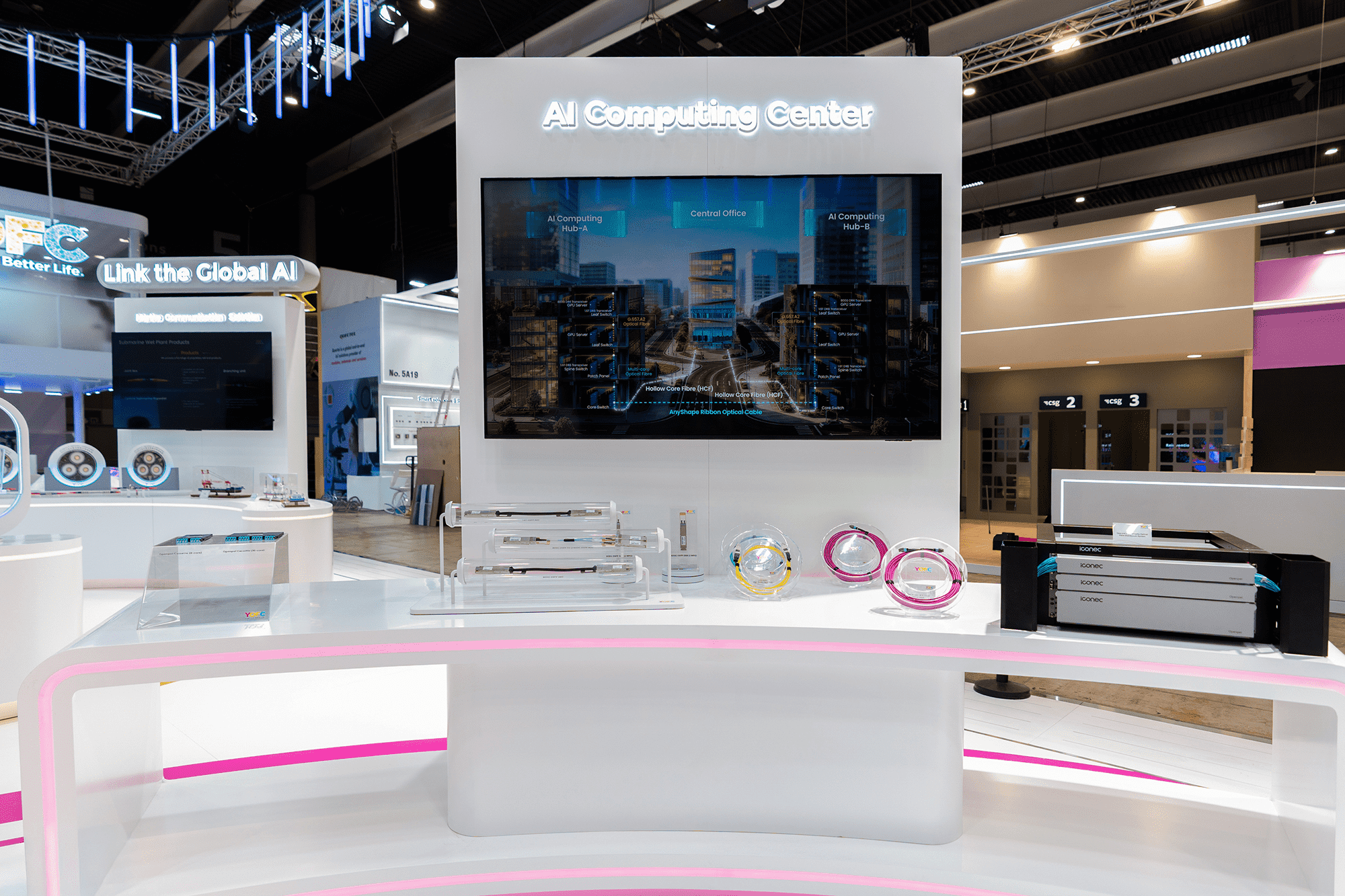
To address the rapidly increasing demand for computing capacity and data transmission driven by large-scale AI workloads, YOFC introduced its AI computing center connectivity solution. The solution integrates hollow-core fibre, multi-core fibre, high-performance multimode fibre, and 800G/1.6T high-speed optical transceivers, together with environmentally responsible cabling systems.
Designed for high-performance AI computing environments and AI data-center connectivity, the solution enables efficient, low-latency data transmission between computing clusters while supporting scalable deployment across diverse industry scenarios. Its energy-efficient design also helps reduce data-center power consumption, supporting more sustainable AI digital infrastructure development.
Global Optical Network Connectivity for AI Infrastructure
Submarine and Backbone Optical Connectivity Solutions
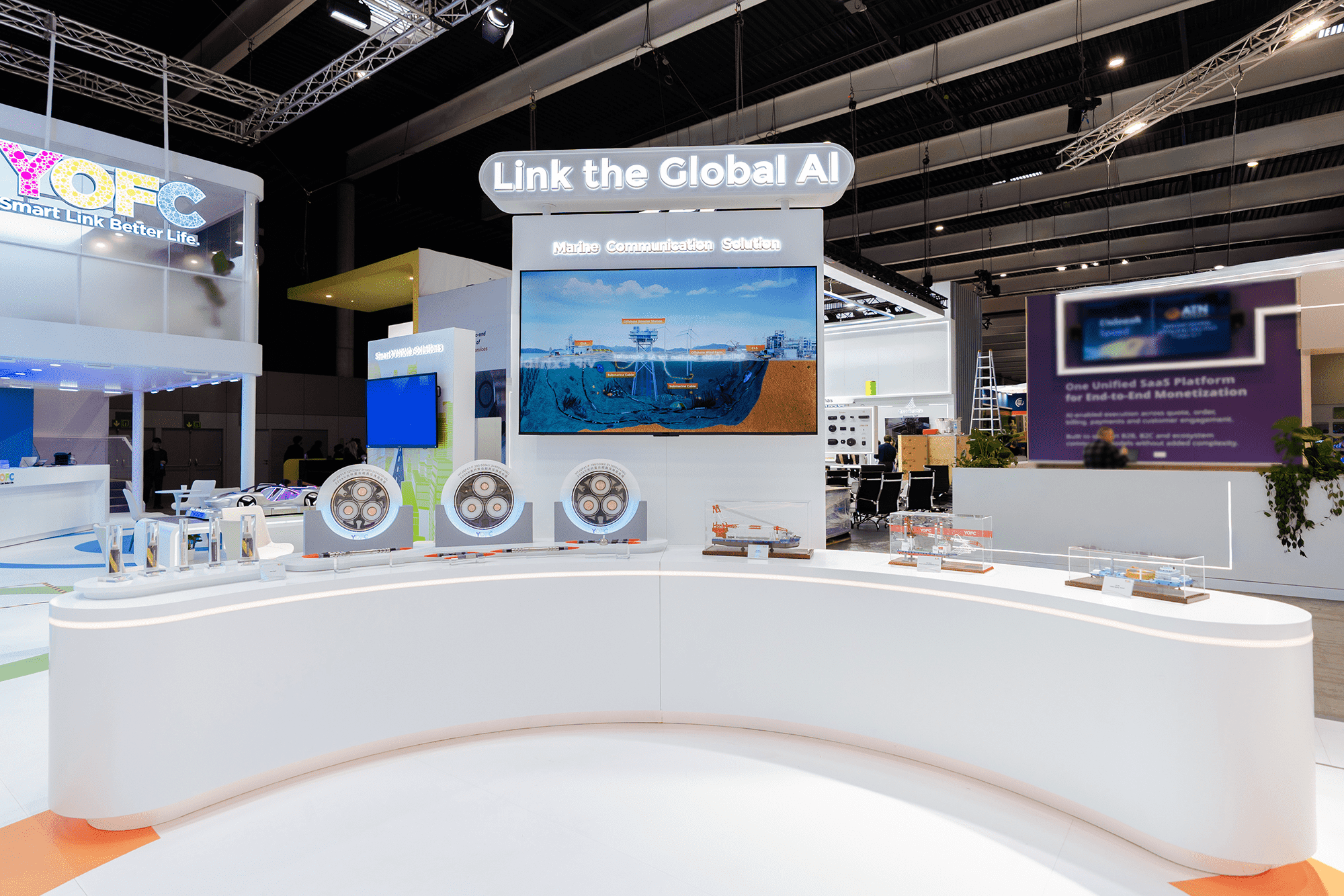
To support the cross-regional collaboration required by large-scale AI models, YOFC presented its global optical network connectivitycapabilities for AI networks. The solution combines submarine optical and power cables, multi-core fibre, and G.654.E fibre to support long-distance, high-capacity backbone transmission.
Submarine and power cable systems provide integrated infrastructure for transoceanic communications and energy transmission, while multi-core fibre significantly increases transmission capacity per fibre. G.654.E fibre enables ultra-long-distance, high-capacity backbone connectivity. Together, these technologies support high-speed, stable, and low-latency data transmission across globaldata networks and optical infrastructure.
Industry Applications for Optical Fibre Technologies
“Fibre+ Industry” Solutions
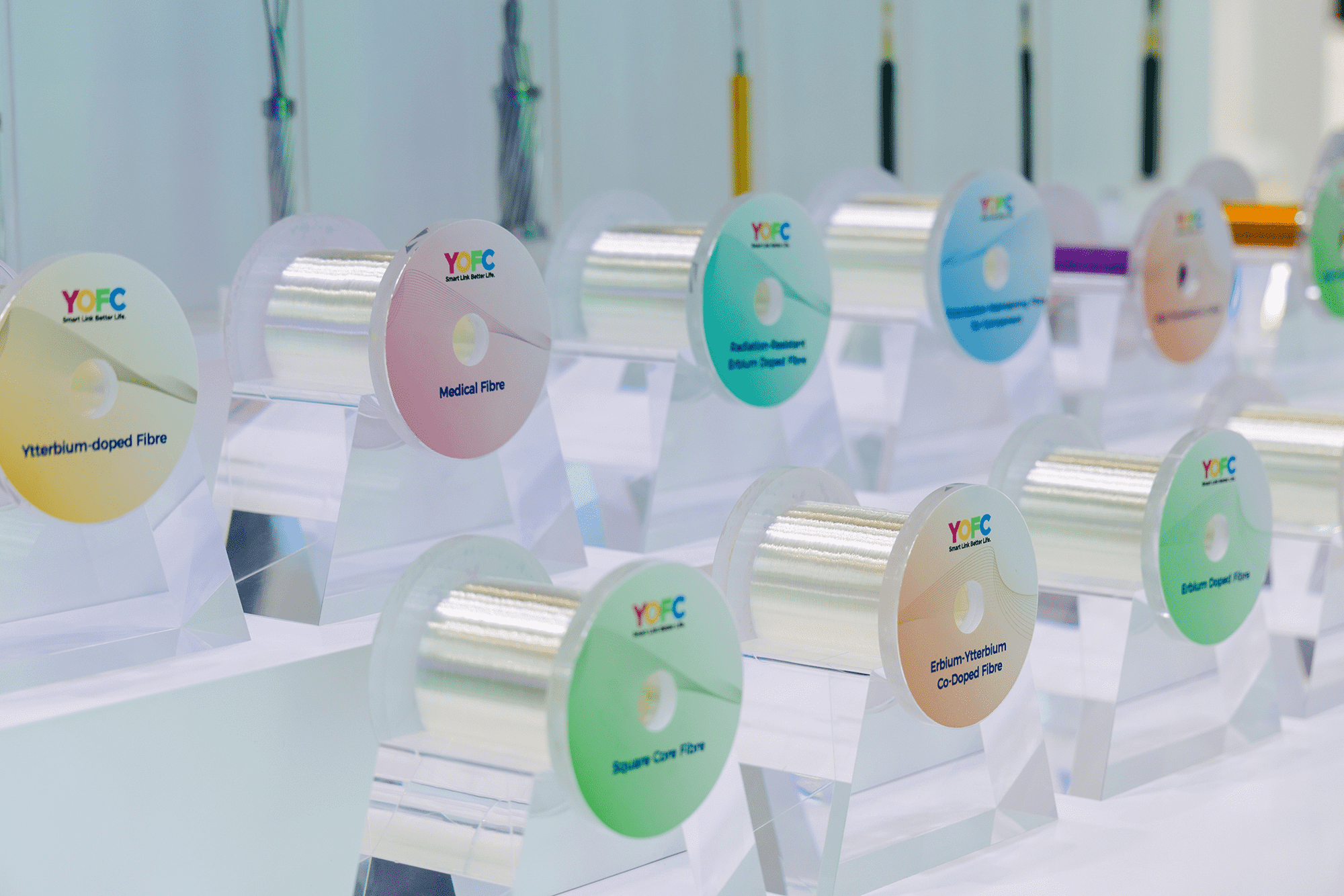
YOFC also presented its “Fibre+ Industry” solutions, which apply optical fibre technologies across multiple vertical sectors to support intelligent infrastructure and digital transformation.
- All-Optical Intelligent Vehicle Networks: High-speed, reliable in-vehicle fibre networks support real-time communication between vehicles, road infrastructure, and cloud platforms, improving the reliability of autonomous driving systemsand overall traffic efficiency.
- Smart Urban Rail Communications:An all-optical rail communication network connects trains, control centers, and passengers, enabling real-time scheduling and improving operational efficiency.
- Intelligent Sunlight Collecting System: Fibre-based daylight transmission systems deliver natural light into underground spaces, factories, and other environments, providing energy-efficient and healthy lighting solutions.
- Smart Entertainment Infrastructure: High-bandwidth, low-latency fibre networks enable advanced digital entertainment services including 8K ultra-high-definition video and immersive VR/AR experiences.
- Specialized Industrial Applications: YOFC’s specialty fibre technologies support sectors including optical communications networks, oil exploration, ultra-high-voltage power transmission, industrial lasers, and medical technologies.
FTTx Access Networks and Optical Broadband Connectivity
Full-Scenario FTTx Solutions

Focusing on the final segment of network connectivity—from homes to offices and campuses—YOFC presented full-scenario FTTx solutions. Flexible deployment architectures such as Fibre to the Home (FTTH), Fibre to the Desktop (FTTD), and Fibre to the Machine (FTTM) ensure high-performance optical broadband accessacross residential, commercial, and industrial environments.
These solutions deliver a wide range of services including gigabit broadband, 4K/8K video streaming, smart home systems, remote work, and industrial IoT applications over high-speed optical fibre networks.
Hollow-Core Fibre Technology
Advancing Next-Generation Optical Communications
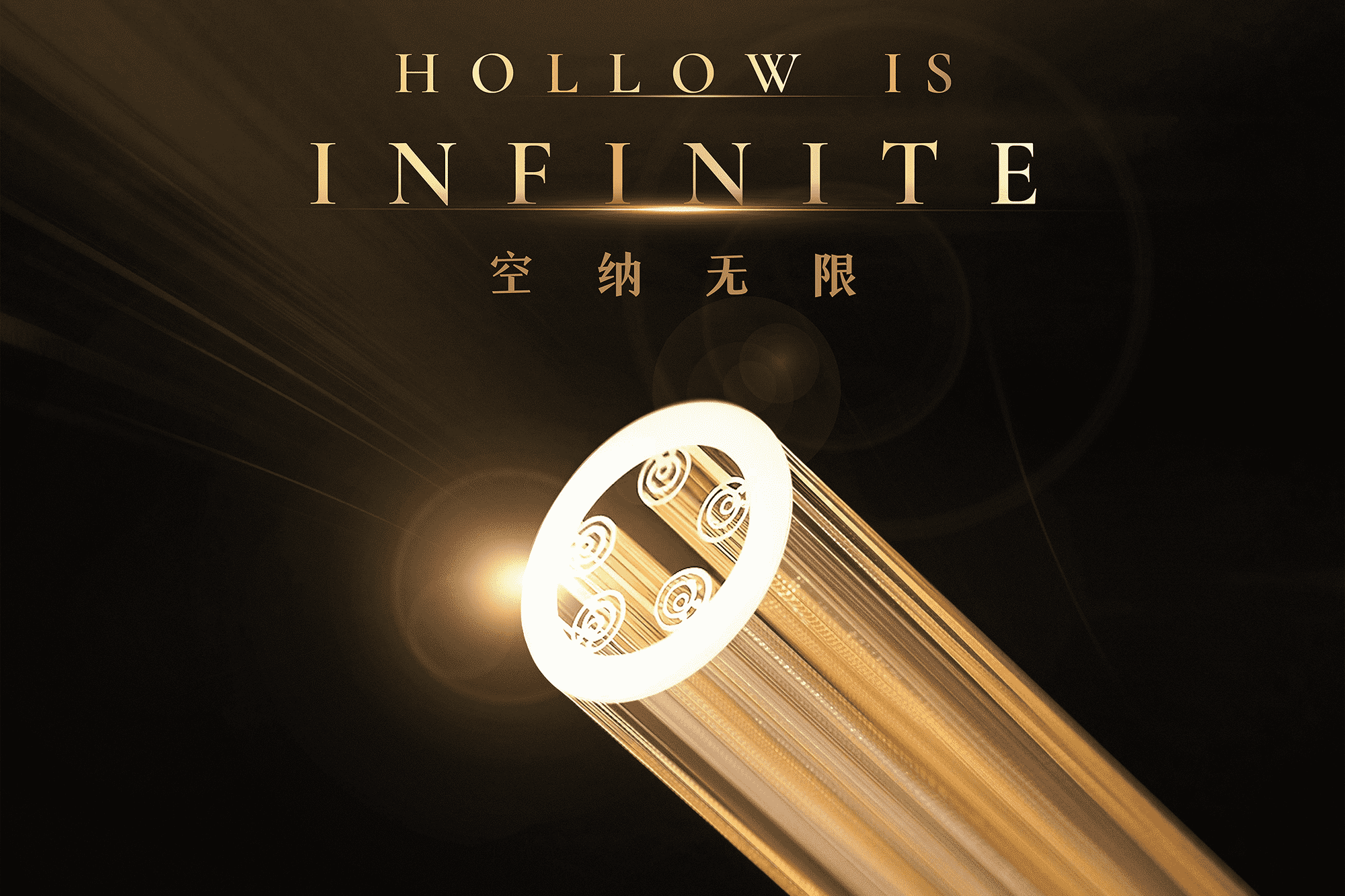
A key highlight of YOFC’s exhibition was its hollow-core fibre technology, which replaces the traditional solid quartz core with an air core that allows light signals to travel closer to the speed of light in vacuum.
Compared with conventional fibre, hollow-core fibre can reduce transmission latency by approximately 31% while significantly reducing nonlinear optical effects. These performance advantages make possible emerging applications such as AI data-center interconnects, distributed large-scale AI model training, and future ultra-high-speed communications.
Building on its manufacturing capabilities and optical engineering expertise, YOFC has achieved industry-leading low transmission loss and scalable production of long-length hollow-core fibre. These developments provide the foundation fornext-generation applications including petabit-per-second communications and future quantum networking technologies built on advanced optical fibre infrastructure.
-
2026.06.25Bridging Borders, Building Leaders: YOFC Successfully Concludes 2nd GLDP1
-
2026.06.04Thirty-eight Years Dedicated to Optical Fibre, A New Chapter in the AI Era
-
2026.03.19OFC 2026 | YOFC Technical Director Luo Jie Presents "Hollow Core Fibres: From Laboratory Innovations to Commercial Applications"
-
2026.03.19YOFC SmartCarbon Receives International Certifications and Industry Awards
-
2026.03.06YOFC Unveils HollowBand® Hollow-Core Fibre at MWC Barcelona 2026


